
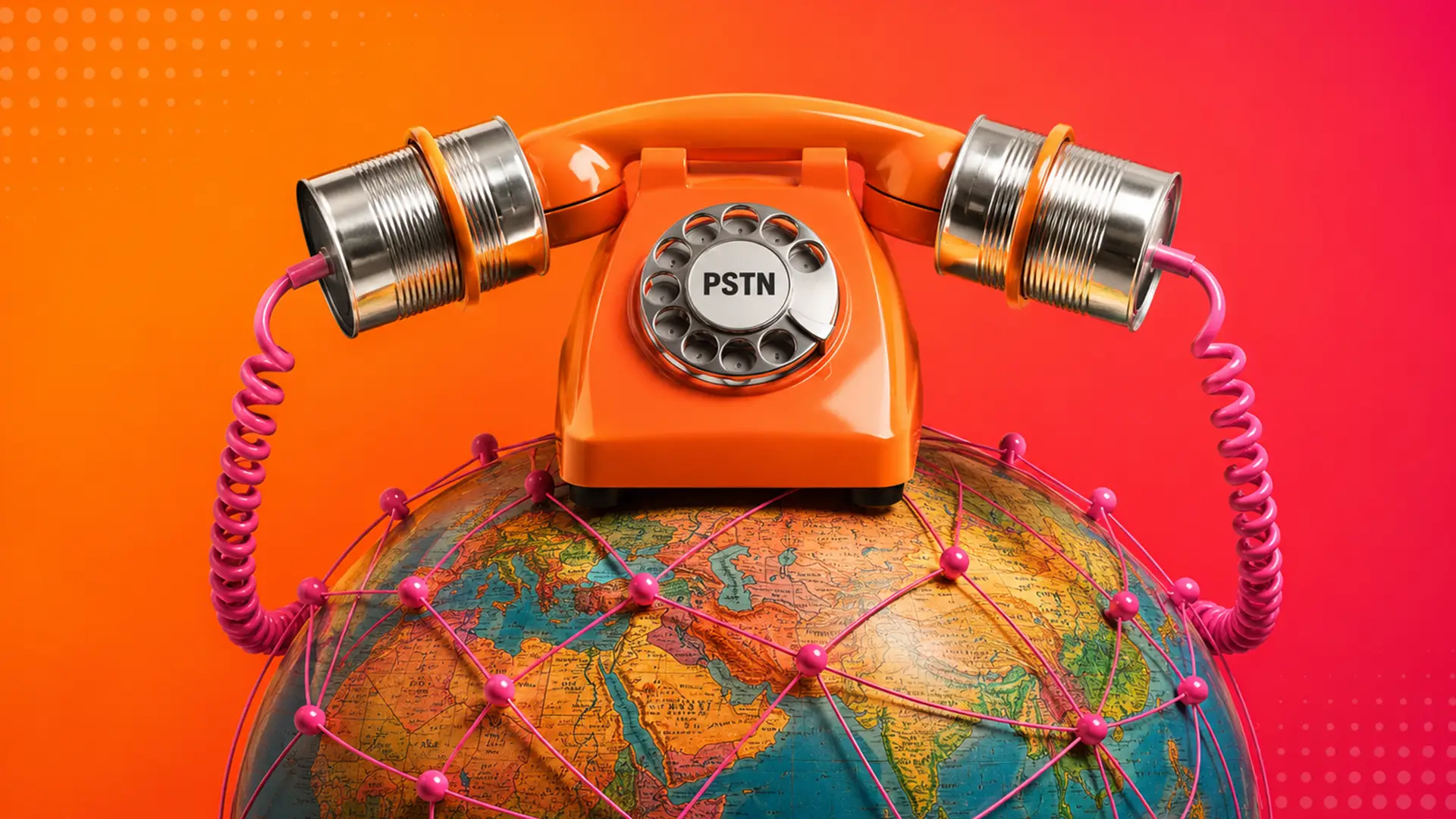
PSTN has kept Britain chatting for generations.
Calls to grandparents, marathon catch-ups, last-minute plans and plenty of optimistic “I’m just leaving now”s have all made their way through it.
But PSTN is on its way out.
The UK’s traditional phone network is making way for newer digital technology, which means the way home landlines work is changing too.
You don’t need to know your copper cables from your telephone exchanges to get your head around the change.
Here’s what PSTN means, why it’s being replaced and what it means for your home phone.
What is PSTN?
PSTN stands for Public Switched Telephone Network.
For decades, it’s been the network behind landline calls in homes and businesses up and down the UK.
You pick up the phone, dial a number and PSTN connects you to whoever you’re calling.
There’s plenty more happening in the background, from telephone exchanges to miles of cabling.
But unless you’re particularly curious about the nooks and crannies of phone networks, that’s really all you need to know.
PSTN gets your call where it needs to go.
For generations, we’ve picked up the phone and left the rest to the network.
That’s now changing.
How does PSTN work?
When you make a call on a traditional landline, PSTN connects your phone to the person you’re calling.
It broadly works like this:
- You pick up your landline and dial a number.
- Your call enters the telephone network.
- PSTN routes the call to the number you’ve dialled.
- Their phone rings.
- They pick up, and you start chatting.
Newer broadband technology can connect our homes without relying on the traditional phone network, while digital calling carries home phone calls over your broadband connection instead.
What is a PSTN landline?
A PSTN landline is what most of us would simply call a traditional home phone.
You plug your handset into the telephone socket on the wall, dial a number and make your call over the traditional phone network.
That line has often done double duty, helping deliver broadband as well as carrying phone calls.
It’s why broadband and landlines have been closely linked for so long.
Is PSTN the same as a landline?
Almost, but there’s an important difference.
PSTN is the network. A landline is the phone service you use at home.
Traditionally, the two went hand in hand. Your landline worked over the PSTN, so there wasn’t much reason to separate them.
You can now have a home phone service without your calls travelling over the traditional PSTN.
Instead, calls can be carried digitally using an internet connection.
Why is PSTN being replaced?
The traditional network was built for a world where the home telephone was one of our main ways of communicating.
Broadband now handles everything from streaming and gaming to working from home and video calling.
Meanwhile, full fibre networks are bringing much faster digital connections directly into more homes.
The old PSTN infrastructure is ageing too. Maintaining technology built for an earlier era makes less sense as newer digital networks take over.
So the UK is moving away from traditional PSTN services and towards digital phone technology.
What is the PSTN switch-off?
You’ll probably have seen the phrase PSTN switch-off if you’ve been reading about landlines recently.
It sounds a little more alarming than it needs to.
The PSTN switch-off refers to the move away from traditional analogue phone services and towards digital alternatives.
You might also see it described as:
- The digital switchover
- The landline switch-off
- The PSTN withdrawal
- The move to digital landlines
Despite some of those names, it doesn’t mean every landline is simply being switched off and forgotten about.
Many households can continue to have a home phone service.
The difference is that calls will increasingly be made digitally rather than through the old PSTN.
Your phone provider should tell you when your service is changing and explain anything you need to do.
What is replacing PSTN?
The replacement for traditional PSTN calls is digital phone technology.
You’ll often see VoIP mentioned here.
VoIP stands for Voice over Internet Protocol. It lets your voice travel as digital data using an internet connection rather than the traditional telephone network.
Sounds very techy but that doesn't mean using it has to be.
You can still pick up a phone, dial a number and have a chat.
The main difference is how your voice gets to the person on the other end.
With a traditional PSTN call, it travels through the old telephone network.
With a digital phone service, it travels using modern IP technology.
What’s the difference between PSTN and VoIP?
PSTN and VoIP can both help you make a phone call. They take different routes to get there.
PSTN:
- Uses the traditional telephone network
- Has historically relied on telephone lines and exchanges
- Was designed primarily around voice calls
- Traditionally lets you plug a phone into a telephone wall socket
- Is being replaced by newer technology
VoIP:
- Uses digital, internet-based technology
- Sends your voice as digital data
- Works alongside modern broadband networks
- May require your home phone to connect to your broadband router
- Is increasingly being used for home phone services
For most people, making a call will feel much the same.
It’s the technology behind the call that’s changing.
Will my landline stop working when PSTN goes?
Moving away from PSTN doesn’t automatically mean losing your home phone.
Instead, your provider may move your landline onto a digital phone service.
There might be a small change to your setup. For example, your handset may need to plug into your broadband router instead of the traditional telephone socket on the wall.
What you need to do will depend on your provider and your current setup.
So if you receive a message about your phone service changing, it’s worth giving it a thorough read-through.
And if you’re not sure whether your landline has already gone digital, your provider can tell you.
Can I keep my landline number?
Nobody wants to learn a new phone number after finally getting the old one committed to memory.
Thankfully, moving from a traditional PSTN service to a digital phone service doesn’t automatically mean losing your existing home number.
If you’re also changing provider, however, check what happens to your number before cancelling your current service.
If keeping it matters to you, confirm the details first.
Will my existing home phone still work?
There’s a good chance it could.
Many existing home phones can continue to work with digital phone services. You may simply need to connect the handset differently.
Your provider might ask you to:
- Plug your phone into your broadband router
- Use an adapter
- Change how extension phones around your home are connected
Don’t rush out and buy a shiny new handset before checking.
Your existing phone might have plenty of life left in it.
What about alarms and other devices connected to my phone line?
Your landline might be connected to more than your home phone, so it’s worth checking what else uses it before your service changes.
Some devices have traditionally relied on a phone line, including:
- Personal alarms
- Telecare equipment
- Some burglar and security alarms
- Medical monitoring devices
- Fax machines
- Older specialist equipment
If you have any of these at home, find out whether they’ll work with a digital phone service.
For essential equipment such as a personal alarm or telecare device, check with both your phone provider and the company that supplies or monitors the equipment. They can tell you whether anything needs to be changed or updated before your landline moves over.
Will a digital landline work during a power cut?
This is one of the biggest changes to be aware of.
A traditional landline could sometimes continue working during a power cut because it didn’t rely entirely on electricity from your home.
Digital phone services work differently.
Your new phone service may rely on your broadband router. And your router needs electricity.
If the power goes out, your router could go off too. That can mean your digital home phone stops working until the power returns.
For many households, a mobile phone provides another way to make calls.
But that isn’t the case for everyone.
If you:
- Rely heavily on your landline
- Have poor mobile signal at home
- Don’t use a mobile phone
- Use your phone for essential communications
tell your provider.
Ask what happens to your service during a power cut and whether a backup option is available for your circumstances.
Do I need broadband for a digital landline?
Digital phone services use internet protocol technology, but that doesn’t mean you should rush out and arrange a new broadband package yourself.
How the service is provided depends on your phone company and your connection.
If your provider is moving your landline away from PSTN, they should explain what you need and supply instructions for setting everything up.
If anything isn’t clear, ask before making changes to your existing service.
Much easier than trying to untangle it afterwards.
Does the PSTN switch-off affect my broadband?
PSTN and broadband are separate services, but they’ve shared some of the same infrastructure for years.
Older broadband technologies can use copper telephone lines for part or all of the connection to your home.
Full fibre broadband works differently.
With Fibre to the Premises (FTTP), fibre-optic cable runs directly to your home. Your broadband connection no longer needs the traditional copper telephone line for that final stretch.
That’s why you’ll often hear PSTN, copper lines, digital phones and full fibre mentioned in the same conversation.
They’re all part of a wider change in how UK homes get connected.
Is PSTN the same as copper broadband?
No.
It’s an easy mix-up to make because they’ve spent years sharing the same bit of wire.
PSTN is the traditional network used for telephone calls.
Copper broadband refers to broadband connections that use copper wiring for some or all of the journey to your home.
One is about phone calls. The other is about getting online.
Historically, they could both arrive through the same telephone line.
Full fibre changes that by bringing a fibre connection directly into your home.
Do I need to do anything about the PSTN switch-off?
Probably less than you think.
There’s no need to start unplugging cables or replacing perfectly good phones.
Your provider should contact you when something needs to change.
There are a few useful things you can do in the meantime:
- Check where your phone plugs in. If it already connects to your broadband router, you may already have a digital phone service.
- Read messages from your provider. Especially anything mentioning your landline, digital phone service or changes to your connection.
- Check other devices. Make sure alarms, telecare equipment and other devices using the phone line will continue to work.
- Tell your provider if your landline is important to you. Especially if you don’t have a mobile or struggle with mobile signal at home.
- Ask about power cuts. Find out what happens to your home phone if your router loses power.
- Check before cancelling anything. Particularly if you want to keep your existing phone number.
A few quick checks now can save a fair bit of head-scratching later.
Do I need a new phone when PSTN is switched off?
Maybe not.
If your current handset is compatible with your provider’s digital phone service, you may be able to carry on using it.
You might simply plug it into a different place.
Your provider should tell you if you need an adapter, new equipment or a different handset.
So before consigning your old phone to the drawer of forgotten chargers and mystery cables, check whether it still works with your new service.
What are the benefits of replacing PSTN?
PSTN has served UK households for generations, but modern networks are better suited to how we communicate now.
Moving to digital technology means phone services can run alongside the broadband networks we increasingly depend on every day.
It also means moving away from ageing infrastructure that becomes harder to maintain over time.
You can still make calls, receive calls and stay in touch. It’s mainly the technology carrying those conversations that’s changing.
What does the end of PSTN mean for you?
PSTN has been part of everyday life for so long that most of us never needed to know its name.
Now you do. Lucky you.
But the change itself is fairly straightforward.
The old telephone network is being replaced by digital technology. Your home phone doesn’t have to disappear with it. It may simply connect in a different way.
Keep an eye on what your provider sends you, check any alarms or other devices connected to your phone line, and make sure you know what happens during a power cut.
Frequently Asked Questions
What does PSTN stand for?
PSTN stands for Public Switched Telephone Network. It’s the traditional network that has carried landline calls around the UK for decades.
What does PSTN mean?
PSTN is the traditional telephone system used to connect calls between fixed phone lines. It uses a network of telephone lines, exchanges and other equipment to route calls.
What is a PSTN phone line?
A PSTN phone line is a traditional fixed telephone connection using the Public Switched Telephone Network.
In UK homes, these services have commonly been associated with copper telephone lines.
Is PSTN the same as a landline?
Not quite.
PSTN is the traditional network used to carry calls. A landline is the fixed home phone service you use.
A modern landline can be provided digitally without using the traditional PSTN.
Why is PSTN being switched off?
The traditional network uses ageing technology and infrastructure. The UK’s communications networks are moving towards modern digital services that work alongside newer broadband technology.
What will replace PSTN?
Digital phone services are replacing traditional PSTN services.
These commonly use internet protocol technology, including VoIP, to carry calls digitally rather than through the old telephone network.
Is VoIP the same as PSTN?
No.
PSTN uses the traditional telephone network. VoIP sends voice calls digitally using internet protocol technology.
Both let you make phone calls. They use different technology to do it.
Will I lose my landline?
Moving away from PSTN doesn’t necessarily mean losing your home phone.
Your provider may move you to a digital landline service instead, allowing you to continue making and receiving calls at home.
Can I use my old phone after the PSTN switch-off?
You may be able to.
Many existing handsets can work with digital phone services, although you might need to plug yours into your router or use an adapter.
Check with your provider before buying anything new.
What happens to my landline in a power cut?
Digital landlines can rely on equipment in your home that needs electricity, such as your broadband router.
That means your home phone may stop working during a power cut.
If you depend on your landline, speak to your provider about what backup options are available.
