
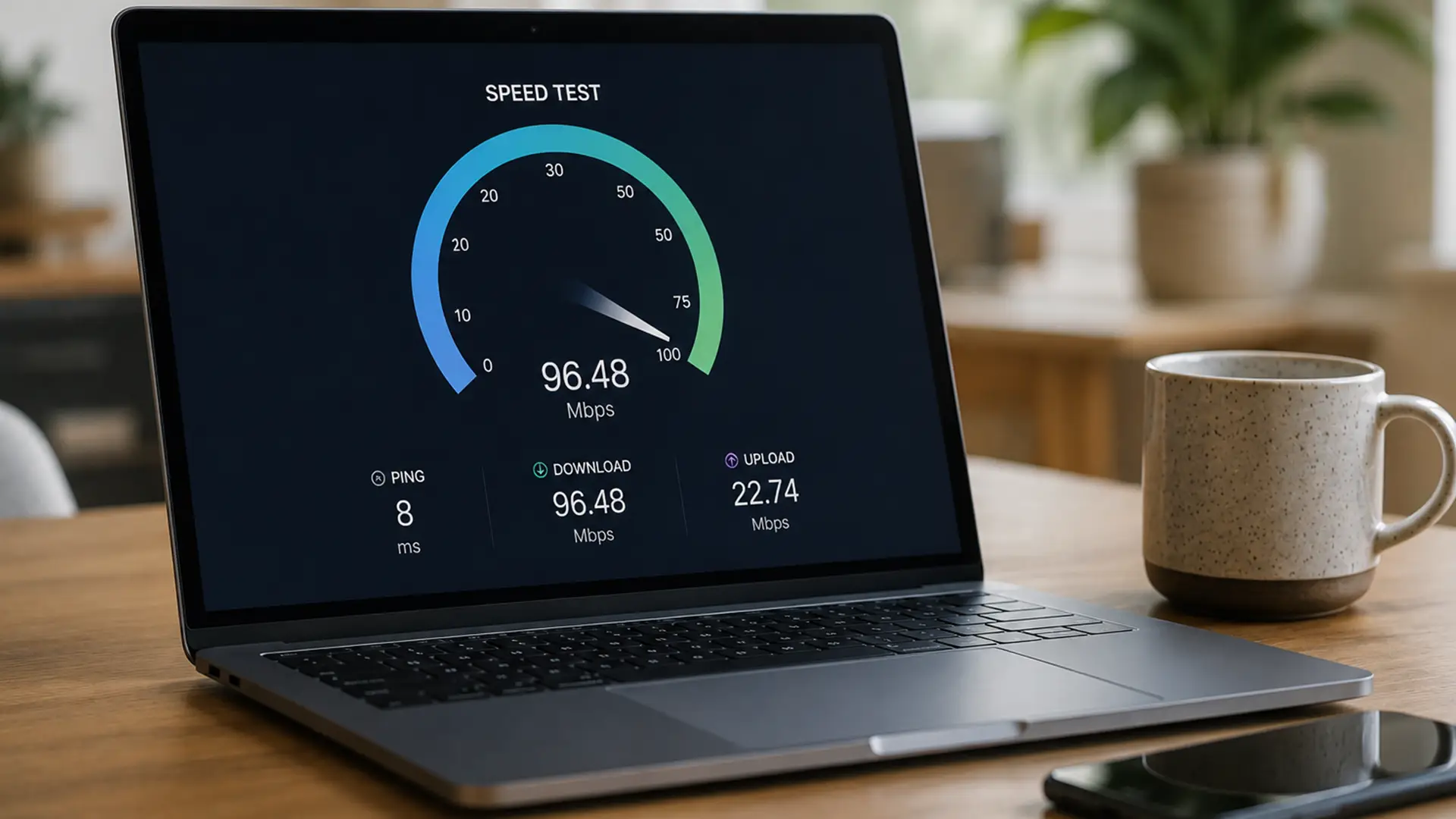
When shopping for the best broadband deal, one of the most common questions is: “What is a good broadband speed?”
The answer depends on what you use your internet for. For example, streaming your favourite show on Netflix, gaming online with your friends, or just browsing through your emails all require different speeds measured in megabits per second (Mbps).
In this guide, we will cover what ‘good broadband speed’ means, how it impacts your online experience, and how to choose the right broadband deal for your household.
Understanding Broadband Speeds (in Mbps)
Broadband speeds are measured in megabits per second (Mbps). This measures how fast data moves from the internet to your device (download) and from your device to the internet (upload). In short:
Download speed: impacts streaming, browsing, and downloading files.
Upload speed: crucial for video calls, gaming, and sharing large files.
See our full guide on Download vs Upload Speeds for more detail on the best broadband speeds.
What Broadband Speed Do You Really Need?
The broadband speed you need depends on your household size and how you use the internet, and the examples below show how different speeds can suit different types of households.
- Basic browsing & email: 10–15 Mbps
- HD streaming: 25 Mbps
- 4K streaming: 40 Mbps+
- Online gaming: 50 Mbps+ with low latency
- Working from home with video calls: 50–100 Mbps
- Large households with multiple devices: 150 Mbps+
For households with multiple people streaming or gaming at once, full fibre broadband (FTTP) is the best choice for consistent speeds. Learn more: What is Full Fibre Broadband?
If streaming is your main priority, read our guide on the Best Broadband for Streaming in the UK or, if you are focused on gaming, discover the Best Broadband for Gaming.
Average Broadband Speeds in the UK
According to Ofcom’s UK Home Broadband Performance Report, the UK average broadband speed was around 69.4 Mbps, but with the rollout of full fibre, many homes now have access to 1 Gbps+ connections.
This means the definition of a ‘good’ broadband speed is changing, and what was fast five years ago is now considered average.
If you’re searching for fast broadband in the UK, full fibre is your best option for future-proof speeds.
How to Check Your Broadband Speed
Not sure if your connection is performing as it should? Running a speed test is a great place to start.
Before you begin, try to:
- Connect your device to your router using an Ethernet cable where possible.
- Close any apps or downloads running in the background.
- Disconnect any devices you're not using.
- Run the test more than once to get the most accurate picture of your connection.
Afterwards, read our guide to checking your broadband speed to learn what your results mean and how to interpret your download speed, upload speed and latency.
Is My Broadband Speed Good?
There's no one-size-fits-all answer to what counts as a good broadband speed.
The right speed depends on how many people use your connection, how many devices are online, and what you do on the internet each day.
As a general guide:
- 10–15 Mbps – Suitable for browsing the web, checking emails, online shopping and using social media on one or two devices.
- 25 Mbps – Ideal for HD streaming, video calls and everyday internet use in a smaller household.
- 50 Mbps – A good choice for online gaming, working from home and streaming across multiple devices at the same time.
- 100 Mbps – Well suited to families where several people are streaming, gaming, browsing or downloading throughout the day.
- 150–300 Mbps – Recommended for larger households with multiple users watching 4K content, gaming online or working remotely simultaneously.
- 500 Mbps+ – Perfect for busy homes with lots of connected devices, frequent large downloads and households looking to future-proof their broadband.
If your connection regularly slows down when several people are online, it may be time to upgrade to a faster broadband package.
Choosing the right speed comes down to your household's internet habits, so it's worth considering how many people are connected and what you use your broadband for before deciding on a new deal.
Ready to Upgrade to Full Fibre Broadband?
Full fibre broadband is the fastest and most reliable broadband available across the UK, and now is the time to upgrade before the PSTN Switch-Off in 2027. Learn more about the PSTN Switch Off and Why You Need Full Fibre Broadband Before 2027 in our guide.
Why wait until last minute when demand spikes? Upgrading now ensures your household is prepared for the digital switchover and you can take advantage of today’s faster, more reliable fibre networks.
