
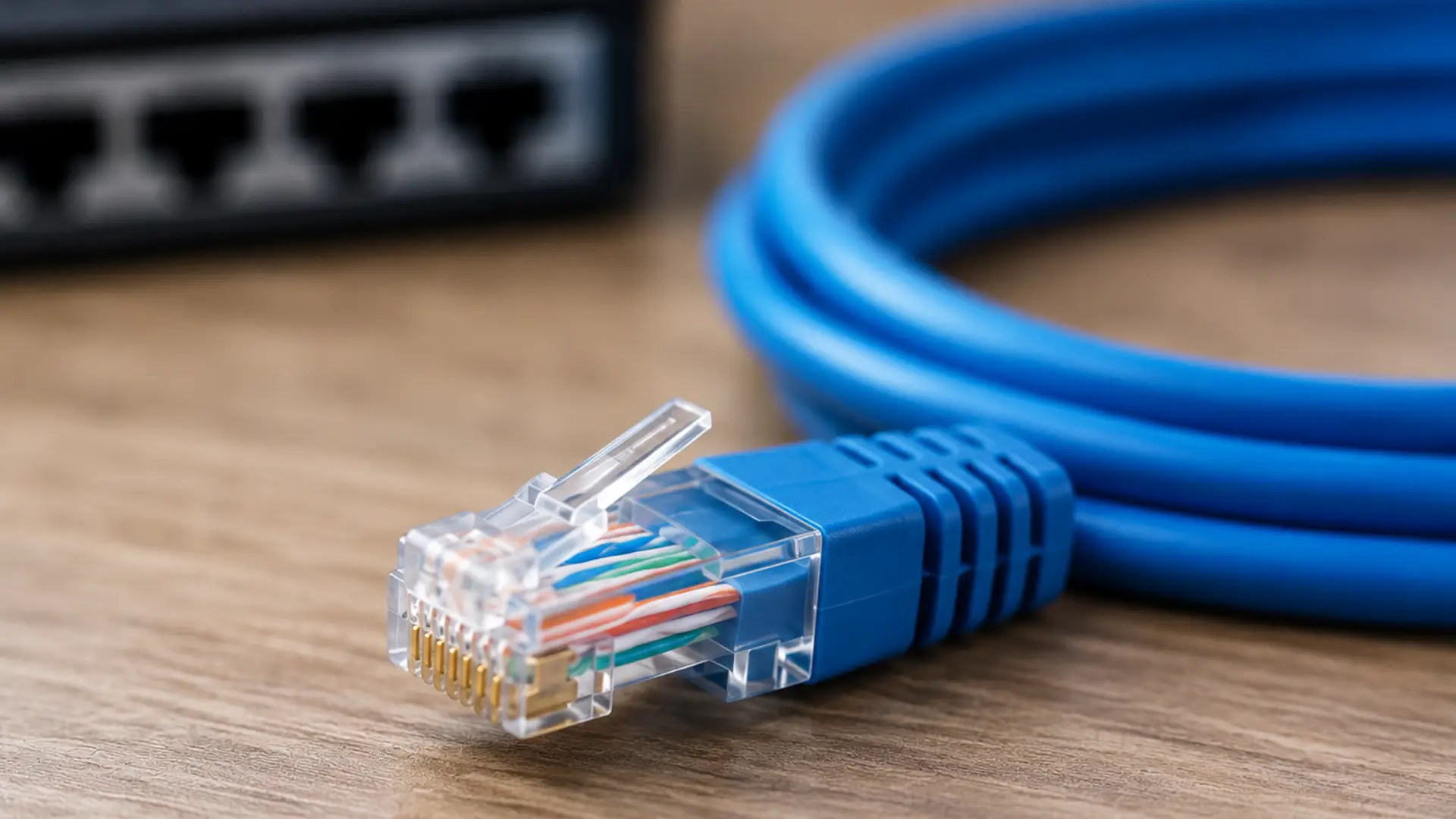
If you put a Cat5e cable and a Cat6 cable side by side, you'd be hard-pressed to spot the difference.
They're both cables. They both have plugs on the end. Exciting stuff.
The real differences are hidden beneath the outer casing, where Cat6 packs in a few upgrades designed to handle faster speeds and reduce interference.
So, what does Cat6 bring to the party, you ask? And is it worth choosing over other Ethernet cables?
Let's find out.
Cat6 Cable Unpacked
A Cat6 cable is an Ethernet cable that helps your devices get the most out of your broadband.
It connects directly to your router, creating a fast, reliable wired connection that's less prone to interference than WiFi alone.
And in a world where every room seems to contain at least one screen, that's pretty useful.
From gaming PCs and smart TVs to work laptops and mesh WiFi systems, Cat6 is built to handle the demands of busy, connected homes.
Which brings us to the big question: how does it compare to other Ethernet cables?
What Does Cat6 Mean?
The "Cat" stands for Category.
As networking technology has evolved, new categories have been introduced to support faster connections and higher performance.
Here's a quick look at how they stack up.
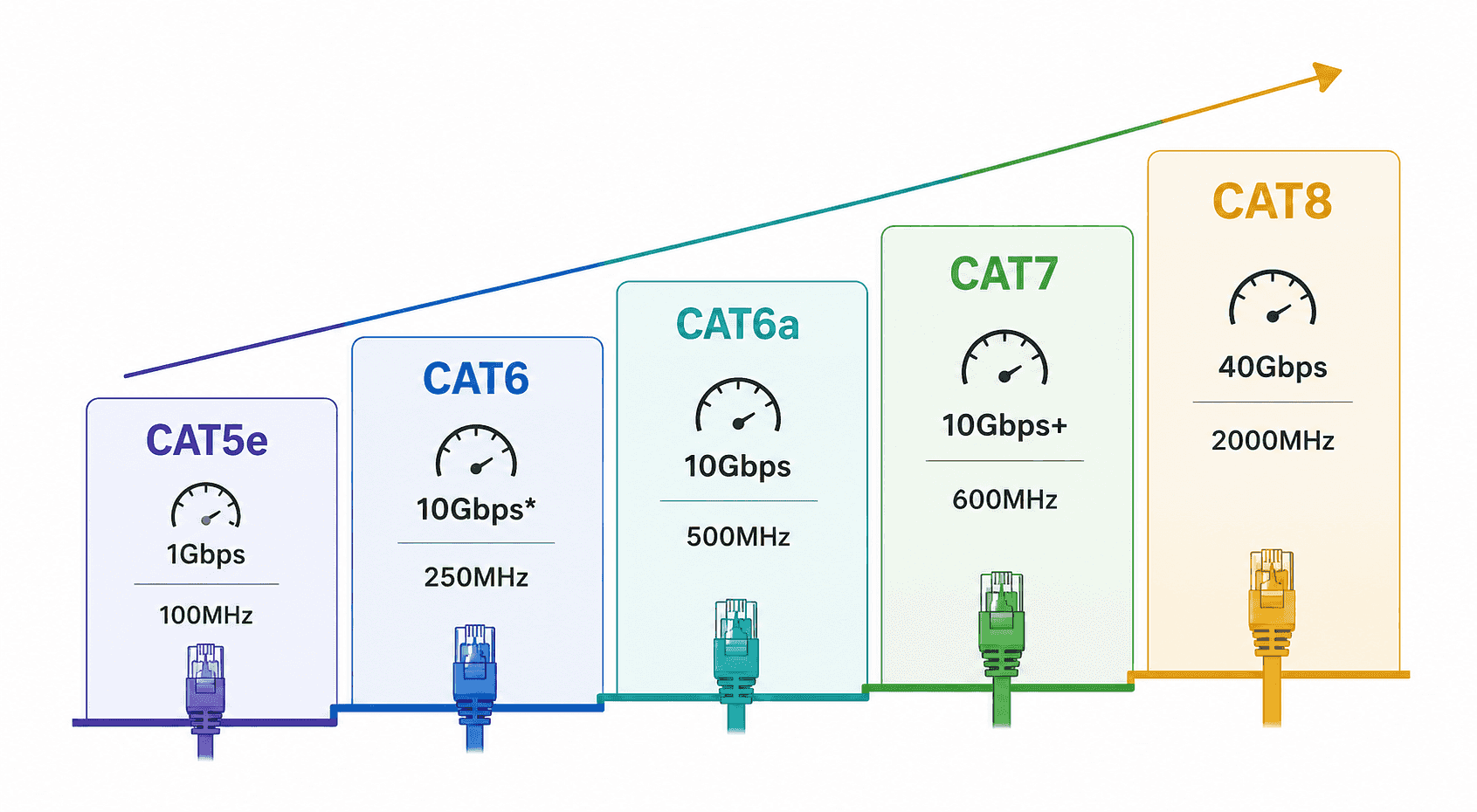
For most homes, Cat6 hits a sweet spot between performance, affordability and future-readiness.
Is Cat6 Faster Than WiFi?
Not necessarily. But it is more consistent.
Modern WiFi technologies can deliver incredibly fast speeds, especially with WiFi 6 and WiFi 7. The difference is that wireless signals can be affected by things like:
- Thick walls
- Distance from the router
- Household interference
- Lots of connected devices
A Cat6 cable sidesteps those problems entirely.
Instead of competing with walls, furniture and every other wireless signal in your home, it creates a direct connection between your device and the network.
That's why wired connections remain a favourite for gaming, streaming and working from home.
Do You Need a Cat6 Cable for Full Fibre Broadband?
You probably don't need to rip out your existing network cables the moment full fibre arrives.
But if you're adding new connections around the home, Cat6 is often the go-to option.
It's fast, reliable and designed with modern broadband in mind.
Cat5e vs Cat6: What's the Difference
Despite all the attention Cat6 gets, Cat5e isn't some ancient relic gathering dust in a server cupboard.
In fact, for many households, it's still doing a perfectly good job.
Cat6 simply takes things a step further, giving your network a bit more room to grow as speeds, devices and demands continue to increase.
Cat5e
- Supports speeds up to 1Gbps
- Widely used in homes
- Lower cost
- Great for standard broadband packages
Cat6
- Supports higher data rates
- Better protection against interference
- More future-proof
- Ideal for gigabit and multi-gigabit networks
If you're installing new cables today, Cat6 is usually the smarter long-term choice.
A little upgrade now can save a bigger upgrade later.
When Should You Use Cat6 Cables?
Cat6 is particularly useful if you:
Work From Home
Video calls don't love unstable connections.
A wired connection can help reduce dropouts and improve reliability during important meetings.
Play Online Games
Every millisecond counts.
Using Ethernet instead of WiFi can help reduce latency and improve consistency while gaming.
Stream in 4K or 8K
The dramatic pause should come from the script, not your broadband.
Cat6 helps TVs and streaming devices stay connected with a reliable wired link that's built for moving lots of data.
Have Full Fibre Broadband
If you've invested in ultra-fast broadband, it makes sense to ensure your home network can keep up.
Can Cat6 Improve Broadband Speed?
Yes. Sometimes.
But probably not in the way you're thinking.
A Cat6 cable won't unlock speeds your broadband package doesn't offer. That's down to your provider and the plan you're on.
What Cat6 can do is help remove some of the friction between your router and your devices.
That means:
- Stronger, more reliable wired connections
- Lower latency for gaming and calls
- Less interference
- More consistent performance when your network is under pressure
In short, it can feel faster because fewer things get in the way.
How to Tell If You're Using a Cat6 Cable
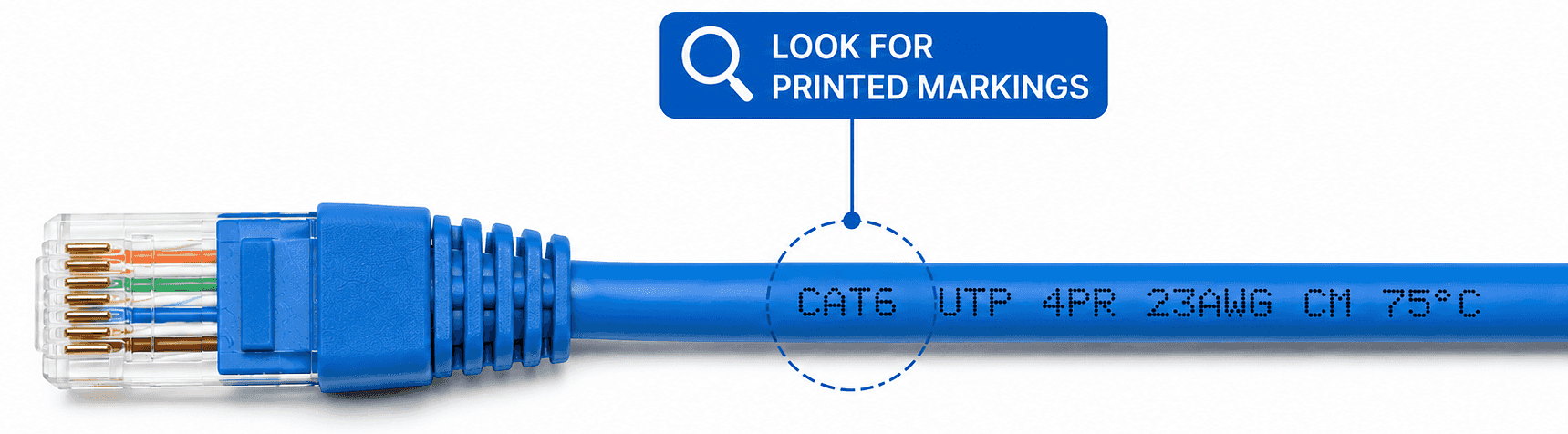
Most Ethernet cables have their category printed along the outer sheath.
Look for markings such as:
- CAT5e
- CAT6
- CAT6a
You may need to inspect the cable closely, but the information is usually printed along its length.
Can't find it? If the cable's been around for years and isn't labelled, replacing it with a new Cat6 cable is often the quickest way to settle the question. They're relatively inexpensive, and at least then, you'll know exactly what you're working with.
Is Cat6 Worth It?
For most homes, absolutely.
Cat6 cables are affordable, easy to find and more than capable of handling the speeds most households need today. Better yet, they've got plenty left in the tank for tomorrow's faster broadband too.
Whether you're building a home office, levelling up your gaming setup or making the most of full fibre, Cat6 is a safe bet.
Final Thoughts
A Cat6 cable won't replace great broadband. But it can help great broadband shine.
If you've got full fibre broadband powering your home, using the right cables helps ensure you're getting every bit of performance your connection can deliver.
The last thing your shiny new full fibre connection needs is yesterday's cabling.
Ready for broadband that's built for modern life?
Fusion Fibre Group's full fibre broadband is built for modern life in all its bandwidth-hungry glory.
From late-night gaming sessions to back-to-back video calls and entire weekends spent streaming.
So go ahead. Open another tab.
We won't judge.
