
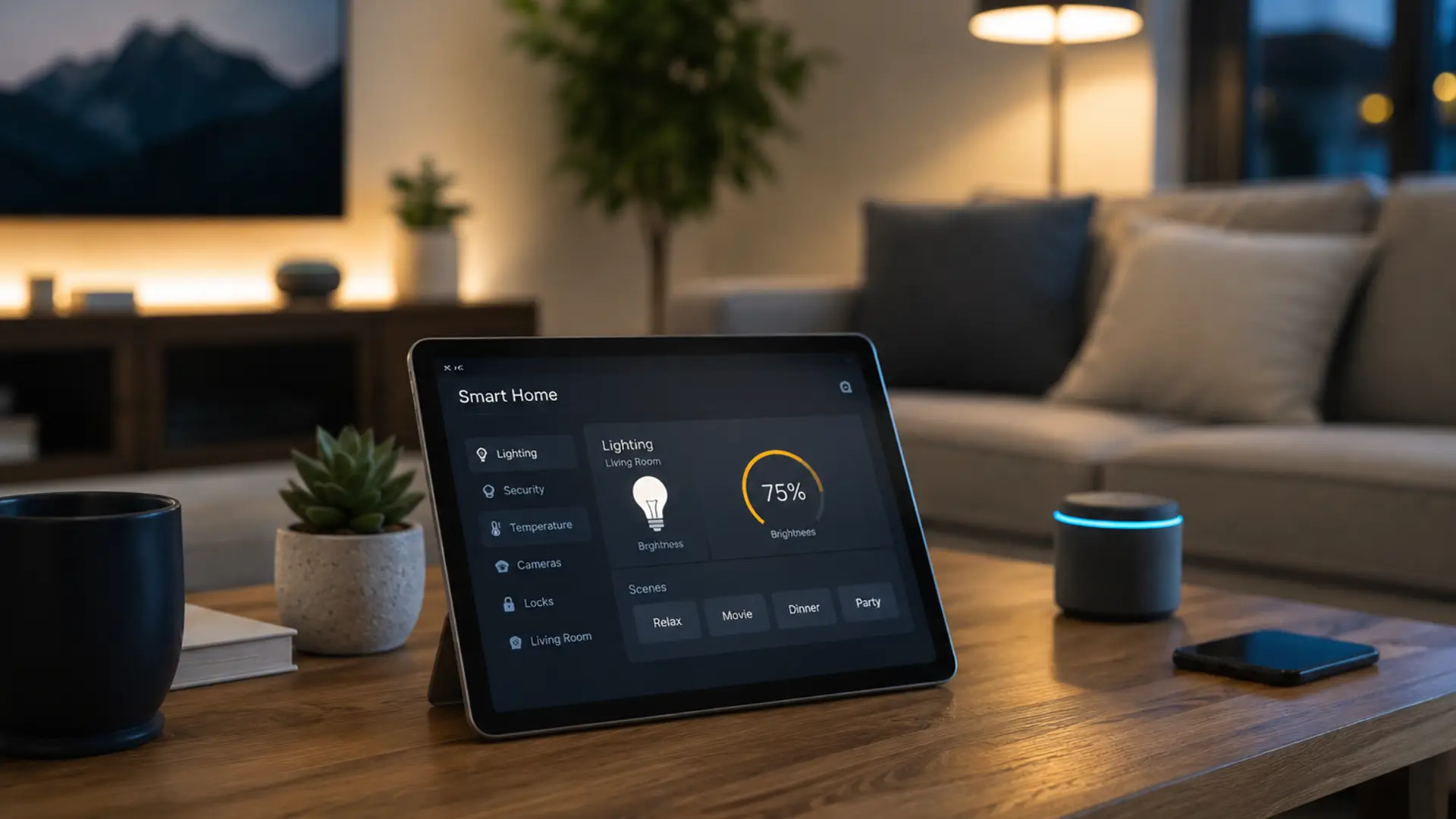
From voice-controlled lights to doorbells that can spot a delivery before you do, smart homes are becoming part of everyday life.
But what makes a home "smart"? And what does it take to get one up and running?
What Is a Smart Home?
A smart home is exactly what it sounds like. A home that does a bit more of the thinking for you.
Instead of fiddling with thermostats, checking whether you locked the front door, or getting up to switch off the lights, connected devices handle it automatically.
Your heating warms the house before you get home. Your lights turn on when it gets dark. Your doorbell lets you know when a parcel arrives.
All controlled from your phone, your voice, or a few clever routines running in the background.
The goal is simple: make life easier, more convenient, and more energy efficient too.
How Does a Smart Home Work?
Smart homes rely on connected devices communicating through your home network.
Most devices connect to your broadband via WiFi, although some use technologies like Bluetooth, Zigbee or Thread to communicate with a central hub.
Once connected, devices can:
- Receive commands
- Share information
- Trigger automated actions
- Be controlled remotely
All in all, they allow you to spend less time fiddling with settings and more time getting on with your day.
No button pressing required.
Common Smart Home Devices
The smart home market has exploded over the past few years, and there are now devices for almost every room in the house.
Smart Speakers
Devices like Amazon Echo, Google Nest and Apple HomePod act as voice-controlled assistants.
You can use them to:
- Play music
- Set reminders
- Control other smart devices
- Check the weather
- Answer questions
They're often the starting point for many people's smart home setup.
Smart Lighting
Smart bulbs and lighting systems let you control brightness, colours and schedules from your phone or voice assistant.
Want the lights to dim automatically for movie night?
Done.
Smart Thermostats
Smart thermostats help take the guesswork out of heating your home.
They can learn your routine, adjust temperatures automatically and help avoid heating empty rooms when nobody's around.
Popular options include Google Nest, Hive and Tado°.
A comfortable home when you need it, without wasting energy when you don't.
Smart Security Systems
It's nice knowing your home has your back.
Smart security devices can alert you when someone's at the door, keep tabs on things while you're away and help you stay connected to what's happening at home.
All without needing to be there in person.
Smart Appliances
Everything from washing machines to robot vacuum cleaners can now connect to the internet.
Some can even start, stop or schedule tasks automatically.
One less thing on your to-do list.
What Are the Benefits of a Smart Home?
At their best, smart homes solve everyday annoyances before they become problems.
Convenience
One tap, one voice command, and you're in control.
No need to do a lap of the house before bed.
Security
From cameras and smart locks to motion sensors and alarms, these devices help you stay in the know.
Wherever you happen to be.
Energy Efficiency
Smart thermostats, lighting systems and plugs can help cut down on wasted energy.
Good for your bills. Good for the planet, too.
Accessibility
Smart technology can make everyday tasks easier for people who need a little extra support around the home.
From adjusting the heating to turning on lights, simple voice commands can help keep everything within easy reach.
What Do You Need for a Smart Home?
Getting started is surprisingly simple.
Smart Devices
Choose devices that suit your needs.
You don't need to automate your entire house overnight.
Most smart homes start with just one or two devices. A smart speaker, some smart bulbs or a video doorbell are popular first picks.
A Smartphone or Smart Hub
Most devices are managed through an app.
Some setups also use a dedicated smart home hub that acts as a central control point.
Reliable Broadband
The more connected devices you add, the more important your broadband becomes.
Why Broadband Matters in a Smart Home
A smart home is only as smart as the connection powering it.
When devices constantly connect to the internet, your broadband becomes the foundation of the entire setup.
Think about everything happening at once:
- Security cameras uploading footage
- Smart speakers streaming music
- Video doorbells sending alerts
- Smart TVs streaming 4K content
- Gaming consoles downloading updates
- Multiple people working from home
That's a lot of traffic.
If your connection struggles to keep up, you may experience:
- Delayed responses from smart devices
- Buffering video streams
- Interrupted security camera feeds
- Slow app performance
- More frustration than convenience
A smart home is supposed to make life easier. Not harder.
Why Full Fibre Broadband Is Ideal for Smart Homes
As smart homes become more connected, many households are upgrading to full fibre broadband.
Copper had a good run.
But full fibre takes things a step further, using fibre optic cables all the way to your home instead of relying on older, less reliable copper infrastructure.
Faster Speeds
Smart devices are constantly sending and receiving data.
Full fibre provides the speed needed to support multiple connected devices simultaneously.
Greater Reliability
A reliable connection helps your smart devices stay connected, responsive and ready when you need them.
Better Performance for Busy Homes
Your smart home isn't the only thing using your broadband.
There's streaming, gaming, working from home, scrolling, shopping and everything else modern life throws at it.
Full fibre helps keep it all running smoothly.
Future-Proof Connectivity
The average home now has dozens of connected devices, and that number continues to grow.
Full fibre provides the capacity to support the technology of today and tomorrow.
How Many Devices Can a Smart Home Have?
More than you might think.
Research regularly shows UK households now own dozens of internet-connected devices.
A modern smart home could include:
- Smartphones
- Tablets
- Laptops
- Smart TVs
- Streaming devices
- Smart speakers
- Cameras
- Video doorbells
- Smart bulbs
- Smart thermostats
- Gaming consoles
- Wearables
It's easy for households to reach 20, 30 or even 50 connected devices.
That's another reason why choosing the right broadband matters.
Is a Smart Home Worth It?
For many households, absolutely.
You don't need a futuristic mansion packed with gadgets to benefit from smart technology.
Even a handful of connected devices can make daily life simpler, safer and more convenient.
Start with the basics. Add what you'll use. And make sure your broadband is ready to keep everything connected.
A Smarter Home Starts With Smarter Broadband
Smart homes are designed to make life easier. Faster heating, better security, hands-free control and more convenience every day.
But behind every smart light, smart speaker and smart camera is one thing keeping it all connected.
Your broadband.
Smart home? Meet smart broadband.
As homes become more connected, a reliable full fibre connection helps your devices stay responsive, your streams stay smooth and your smart home run exactly as it should.
Less faffing. More getting on with your day.
Frequently Asked Questions
Can I Create a Smart Home Without a Smart Speaker?
Of course!
Many smart devices work perfectly well without a voice assistant. In most cases, you can control everything through a smartphone app instead.
Does a Smart Home Need WiFi?
Generally, yes.
Most smart devices rely on WiFi to stay connected, receive updates and respond when you need them to.
After all, a connected home needs a connection.
Is a Smart Home Secure?
Smart home devices are designed with security in mind, but a little good housekeeping helps too.
Keeping devices updated, using strong passwords and turning on two-factor authentication can go a long way towards keeping your smart home secure.
Do Smart Home Devices Use a Lot of Internet?
Most devices use relatively little bandwidth individually. However, multiple devices operating simultaneously can place greater demands on your connection, particularly security cameras and video streaming devices.
